Coming Home to Your Body: Self-Care, Pleasure, and the Permission You Didn't Know You Needed

Somewhere along the way, “self-care” became a hashtag. It got attached to bath bombs and bone broth, to ten-step skincare and twenty-minute journaling prompts, to candles arranged just so. None of it is wrong, exactly. But if you've ever followed every step and still felt vaguely like a stranger in your own body, you already know — the inventory is missing something.
The missing piece is rarely a new product. It's permission. Permission to take up space inside your own skin. Permission to know what you like, ask for it, and stop apologising for needing it. Permission to treat the body you live in as a place worth coming home to — not just a project to be improved.
This is the part of self-care we don't talk about in the soft-lit Reels. The part where pleasure stops being a guilty pleasure and becomes a quiet, daily form of devotion.
Body neutrality is a doorway, not a destination
A lot of conversations about body image stall out at “body positivity” — the noble, sometimes exhausting work of loving every part of yourself. That bar is high, and for many people it sets up a fresh disappointment cycle: I'm meant to love this, and today I don't.
Body neutrality offers something gentler. It says: you don't have to love your body today. You only have to thank it. For breathing. For carrying you here. For holding your day. Neutrality is a doorway, and behind it is something more interesting than love-on-demand: respect.
Respect is what allows you to notice your body without judgement. To put a hand on your chest in traffic and notice it's tight. To run a bath without performing the bath. To bring a wearable vibrator into your evening routine not because the algorithm told you to, but because you want to feel something good in a body you're learning to take seriously.

What pleasure has to do with all of this
Pleasure is one of the fastest ways back into your body. It bypasses the analytical voice. It does not require a journal, a podcast, or a productivity hack. It asks one thing: are you willing to feel?
For many of us — and especially for women, queer folks, and anyone raised in a culture that treated pleasure as something to be earned or hidden — the answer is harder than it sounds. Saying yes to feeling means saying no to the constant low hum of self-monitoring. It means trusting the body's signals without first running them through a committee of internalised opinions.
This is why pleasure belongs in the self-care conversation. Not as an indulgence. As a practice. A regular, unhurried, deliberate appointment with the fact that you are alive, here, in this body, and allowed to enjoy it.
A pleasure ritual that respects how you actually live
You don't have time for a four-hour ritual. Nobody does. What you have time for is something small and consistent — the version of self-care that scales.
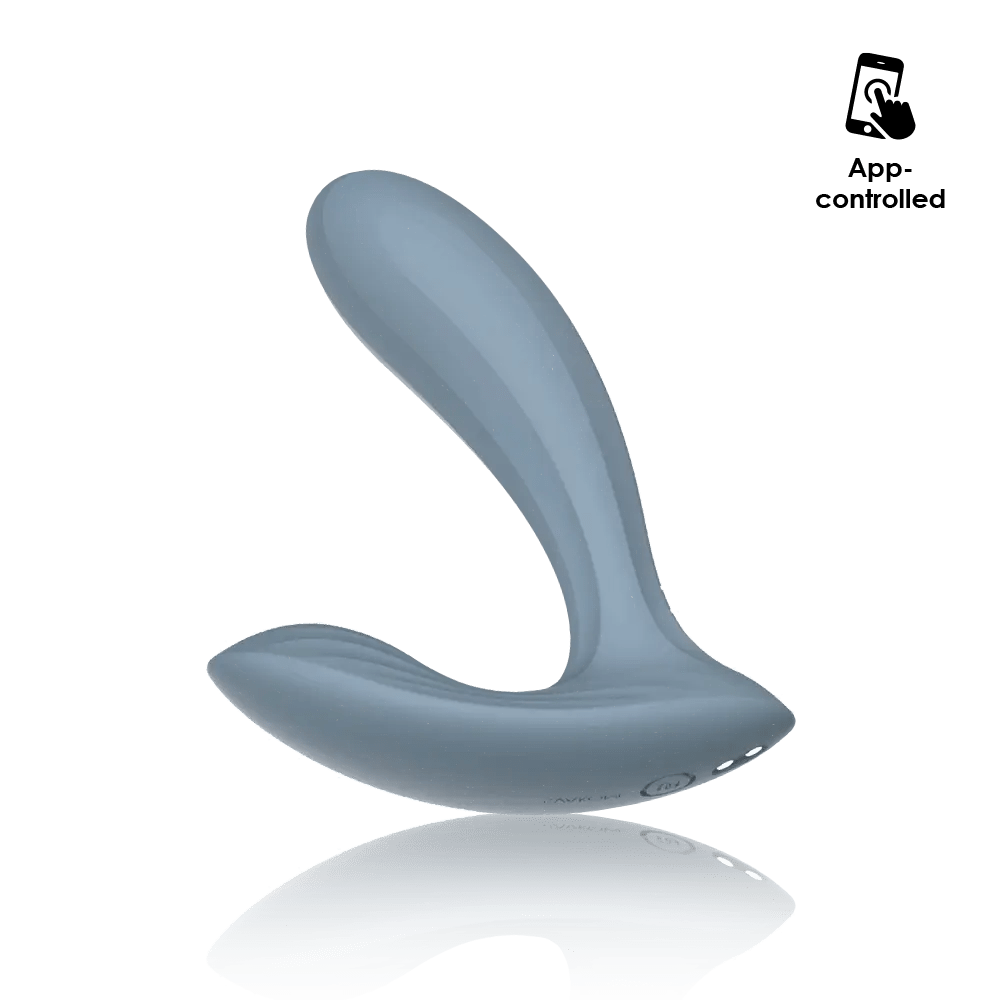
Try this. Two evenings a week, before bed, you give yourself fifteen minutes. Phone face-down. A glass of water nearby. Something you like the feel of against your skin. ERICA — Svakom's wearable, app-controlled vibrator, AUD $134 — on a low setting. The job is not to chase a finish line. The job is to be present with sensation. To notice what your body softens into, what it tenses against, what it asks for if you stop performing and start listening.
Some sessions will be quiet and slow. Some will surprise you. Some will be interrupted by an itch on your nose or a thought about tomorrow's email. All of it counts. The compounding effect of regularly being with yourself in this way is real, and you do not need a study to verify it — you'll feel it.

What to do with shame when it shows up
It might. That's normal. Decades of cultural messaging don't dissolve because you bought a beautifully designed wearable. The voice that says you shouldn't enjoy this or this is selfish or what would so-and-so think is loud, and old, and not yours.
Two small practices help. First, name the voice when it speaks: that's the old narrator. The act of labelling reduces its grip. Second, place a hand somewhere on your body — chest, belly, thigh — and breathe slowly for thirty seconds. You don't have to argue with the voice. You just have to come back to the body it's trying to leave.
Over time, the volume drops. Not because you fought it, but because you stopped reinforcing it.
A note on partners (and not having one)
If you're partnered, pleasure self-care is not a threat to the relationship — it's an upgrade. People who know what they like make better lovers, fuller communicators, and warmer co-conspirators. You can share the practice. You can keep it private. Both are honourable.
If you're not partnered, none of this depends on someone arriving. Pleasure does not require an audience. The body you have, today, is the one that benefits from being met — and met regularly.
The takeaway
Self-care without pleasure is half a practice. It tends to the outside of the body and ignores the inside. A wearable vibrator like ERICA is a small, beautifully made tool that helps you keep an appointment with your own aliveness. Not loudly. Not performatively. Quietly, on a low setting, in a body you're learning to live in with respect.
That is what coming home looks like. And you deserve to live there.
→ Shop ERICA at Svakom Australia, from AUD $134. Discreet shipping, premium silicone, app-enabled — built for the practice, not the performance.